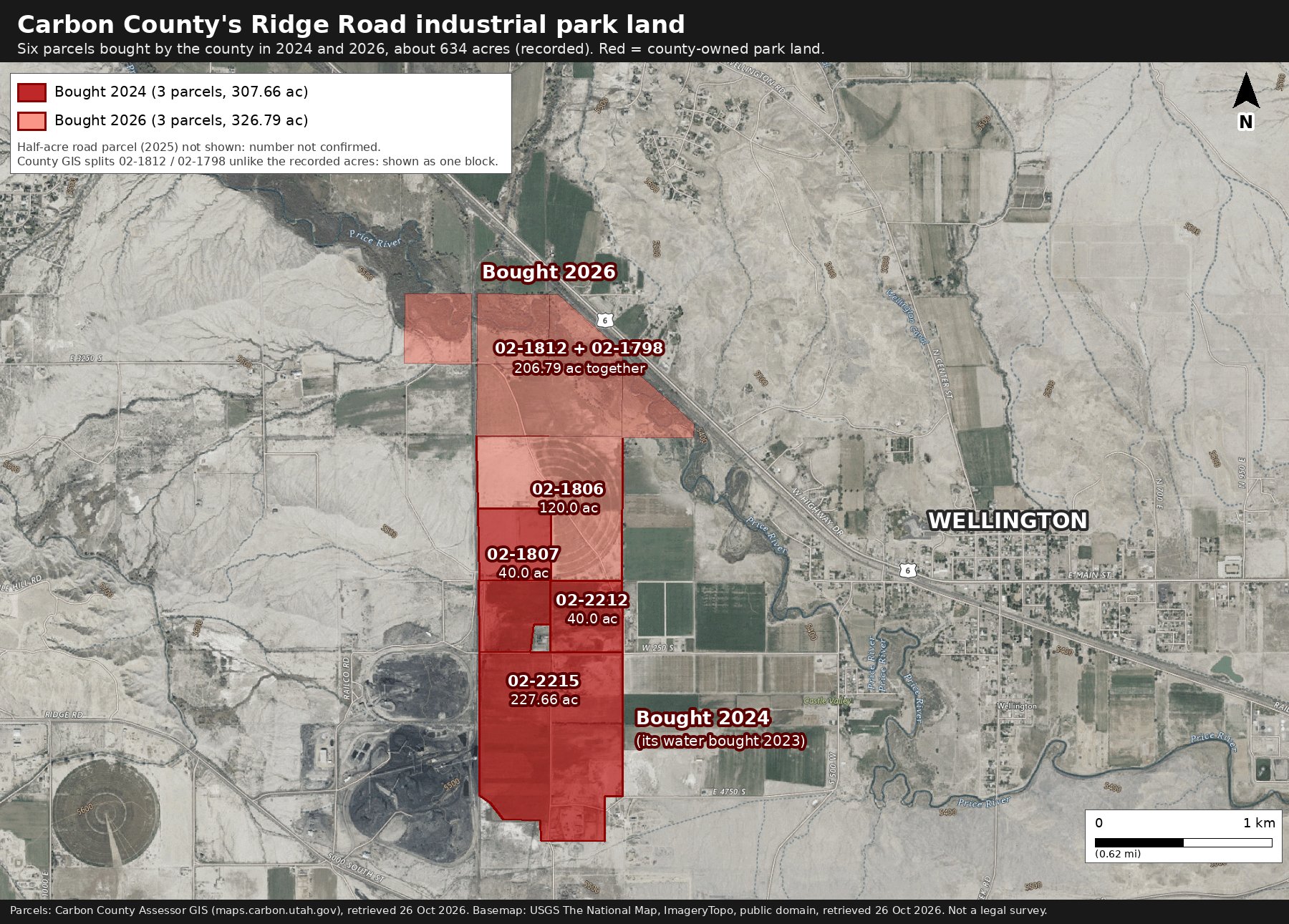
1. Land bought for a company the county didn’t name
By 2025 a large company was talking with Carbon County about building a factory on county land near Ridge Road. Its name didn’t appear in the commission agendas and minutes DIG reviewed until August 19, 2026, but a confidential project whose details match it shows up in the minutes of other public bodies:
- June 2025: the Price River Water Improvement District, a local water district, said a new project’s details “remain confidential due to a signed nondisclosure agreement.” [1]
- August 2025: Jensen told the county’s economic development board the project had grown “to nearly $600 million.” [2]
- September 2025: the water district’s minutes say data “were compiled and sent to Georgia-Pacific.” [3]
- October 2025: the economic development board heard that the main holdup in buying land for the project was “the purchase price of an 80-acre parcel.” [4]
On May 6, 2026, the county commission approved buying more land near the park: 120 acres with 240 water shares for $2 million, and about 207 more acres, from a seller the minutes call 2C’s Properties, for a price that neither the minutes nor the deed states [5, 6, 7]. (The deed names two mineral companies as the sellers.) Among the reasons given for the 120-acre purchase was that it “will maximize the number of companies that could locate here.” [5] No one named the company or said it was under a confidentiality agreement [5, 25, 0:39:30 to 0:45:05].
Thirteen days later, the minutes of Jensen’s update to the economic development board said the company wanted two of the parcels. The board’s minutes called the company “the NDA,” a nickname for the company under the agreement: “The county is in the process of purchasing two more parcels north of their current property. The NDA wants to enter into a purchase agreement for those two parcels.” [8]
On August 19, 2026, Jensen announced that the agreement was lifted. The minutes record that “Georgia Pacific has canceled plans to build a $600 million wallboard factory on county-owned land.” [9] The county had taken title to the last two parcels six days earlier, on August 13 [7]. Jensen said the company had told the county of its decision that morning [10, 0:01:07 to 0:01:20]. He gave one of the reasons for the confidentiality: the factory “would close two facilities in California. And they did not want for employees at those two facilities to hear about this prematurely.” [10, 0:02:26 to 0:02:45]
In other words, by Jensen’s own account, part of the point of the secrecy was to keep workers at two California plants from learning too soon that the new factory would close their plants. Meanwhile the county had already committed to buying the land. At the meeting where it did so, residents weren’t told which company it was, or that it was under a confidentiality agreement [5, 25, 0:39:30 to 0:45:05].
Was that the same company the board had been hearing about all along? No record DIG found says so in so many words. But the pieces line up. The board’s March 2026 minutes call the project “Project Everest, our NDA.” [11] The Price River Water Improvement District, which was studying water for “Project Everest,” recorded that the company told it on August 18, 2026, that it was suspending its Carbon County projects [12, 13]. That was the day before Jensen announced Georgia-Pacific’s cancellation [9]. The district’s minutes say the project’s raw material was about an hour’s haul away; the commission’s minutes say Georgia-Pacific’s plant would have used a gypsum mine in Emery County [9, 13]. And in August 2025 the board heard that the NDA project had grown “to nearly $600 million,” the same size as the Georgia-Pacific plant [2, 9].
Georgia-Pacific is gone. The county still owns the land [6]. On October 6, 2026, Altigen, a company that builds gas-fired power plants for data centers and is planning one east of Wellington, presented its plans to the county planning commission [14, 15]. Asked where its water would come from, a speaker for the company answered: “The initial draw is from previous existing industrial water that the county doesn’t use.” [16, 0:22:24 to 0:22:46]. In March 2025 Jensen told the economic development board the county had “about 900 shares of water available.” [17] In July 2025 he raised water for industry with another county board. On July 14, 2025, the minutes of the county’s Recreation and Transportation Special Service District, a county district funded mainly by mineral-lease royalties whose board the commission appoints, list “Commissioner Larry Jensen” among those attending and record that “Larry discussed water with the board regarding affluent [sic] water and having water available for new industry and looking into the water that the Board has for property they own in Scofield.” [18, 19, 20] They go on: “the water board told them that water could be transferred down to the valley there is an equivalent of 744-acre ft in that water right,” and “He would like the board to think about it.” [18] No record DIG found says which water Altigen meant.
2. “We’ve signed non disclosure agreements,” and the minutes left it out
At the commission meeting on February 4, 2026, Jensen talked about the companies the county was working with. The county’s own video records him saying: “Couple of them we can’t talk about. We’ve signed non disclosure agreements but they’re significant.” [21, 0:19:03 to 0:19:58]
The official minutes of that meeting summarize his remarks: “There are four projects that are promising and significant.” [22] The agreements are not mentioned in his remarks as the minutes record them. In the commission agendas and minutes from November 2022 to October 7, 2026 that DIG reviewed, no confidentiality agreement was put on an agenda. The first mention in the minutes came on August 19, 2026, when Jensen announced that the agreement had been lifted and that Georgia-Pacific had canceled its plans [9].
That wasn’t always how the county handled it. In October 2022, when the county signed a confidentiality agreement with an earlier prospect, it put the agreement on a public agenda, named the company, and voted on it [23, 24].
At the May 6 meeting, just before moving to buy the 2C’s land, Jensen said on video: “That’ll deplete our reserves some.” [25, 0:49:39 to 0:50:15] The minutes record him saying that “no county money is being borrowed for this project” and that careful spending would return a profit, but not that reserves would go down [5]. Both statements can be true, since using savings isn’t borrowing. But the minutes, which summarize the meeting, leave out that the county’s savings would go down; the county’s video has it.
3. The board elected officials were told they could no longer serve on
Much of what the public knows about these deals comes from one place: the minutes of the Carbon County Community Economic Development Board, a county advisory board. Jensen was a member, and he gave the “economic update” at almost every meeting [17, 26, 27, 28, 29].
In April 2025, the state’s Governor’s Office of Economic Opportunity came to that board and “emphasized the importance of documenting our grant processes and successes.” All three county commissioners were there [30].
In January 2026 the county got a $600,000 state grant for a road into the park [22, 31]. While the county worked out how to track the grant, the commission’s minutes say, it was “told by the Governor’s office that elected officials can no longer serve on this board.” Jensen explained why at the meeting: “There were issues with elected officials who may have had too much influence on the board.” A county road official took his seat [22, 31].
But Jensen kept coming. From February 2026 on, the board’s minutes list him as a guest (“Others Present”) rather than a member [8, 15, 32, 33, 34]. He kept giving the economic update, including the May 2026 report about the parcels “the NDA” wanted. As of October 24, 2026, the commission’s page on the county website still lists the “Community Economic Development Board” among Jensen’s assignments [35].
Nothing in the record says a commissioner can’t attend or brief the board, and nothing shows him voting there after January [8, 11, 15, 32, 33, 34]. But the reason he gave for the change was that “there were issues with elected officials who may have had too much influence on the board.” [31] Four months later, the board’s news about the county’s land deals still came from him [8]. No record DIG found shows whether that affected anything the board decided. You decide.
4. What Jensen told the board, and when the public could read it
The people who could follow these plans as they happened were the few in the board’s meeting room. The meetings were open to anyone, but only to those who knew they were happening. Anyone relying on the board’s posted minutes found out weeks or months later, and in at least one case only after Jensen had announced that Georgia-Pacific had canceled.
The economic development board meets in a suite at the county administration building in Price [35, 36]. Its agendas list just one line for Jensen: “Economic update - Larry Jensen.” [36, 37, 38, 39, 40] What he said first appears online when the board’s minutes are posted on the state’s public notice website. That has often taken months. State law also requires an audio recording of each meeting to be available within three business days, and DIG hasn’t established whether the board keeps one [53].
Here is what the board’s minutes record he told it, and when anyone outside the room could read it:
- March 2025. After the county bought the Ridge Road land, “all of sudden we had several people looking to buy.” The county had “about 900 shares of water available.” [17] Minutes posted: May 19, 2025, two months later [41].
- June 2025. The county was “working on answering questions for the NDA,” a $400 to $500 million project. And the U.S. Department of Housing and Urban Development (HUD) had “reached out to Larry and Shanny” (the county’s economic development director, Shanny Wilson) about using the $2.85 million federal grant meant for buying land (the money the county had sought through Congress in 2023; see section 5) for something else, with the county’s “first preference being road development.” [42, 43] (The road plan came up in public two weeks later: on July 2, 2025, Jensen told the commission the county had “decided to accept the money and use it to build the road into the property,” and the commission approved a contract for the road’s environmental review [115].) On October 7, 2026, the commission heard that HUD had approved moving the money to the park road; the minutes record no vote on it [43]. Minutes posted: November 17, 2025, five months later [44].
- July 2025. The company had “narrowed their options down to two sites and Carbon County is one of them.” [28] Minutes posted: January 15, 2026, six months later [45].
- December 2025. The company was “80% sure they are coming to the county,” with “extended purchase agreements until December of next year.” [29] Minutes posted: February 4, 2026, seven weeks later [46].
- February 2026. His first update after leaving his seat. He spoke about Valar Atomics, a nuclear company expanding from California, and said that if Valar expanded to Carbon County, then with “the other 2 NDA’s,” the projects “could provide $4-5 billion in taxable value.” [32] Meeting notice posted: May 18, 2026, three months after the meeting [37].
- April 2026. Altigen planned a 1,200-acre “Jurassic Spark” gas power plant and data center project east of Wellington, with a gas pipeline across federal land. Of Valar Atomics, he stressed “the critical need for public education sessions to address potential concerns before Valor [sic] attempts to purchase property, which would be a public process.” [15] Meeting notice posted: late June 2026, two months after the meeting [38].
- May 2026. “The NDA wants to enter into a purchase agreement for those two parcels.” He also called “the constant pushback” one of the county’s challenges [8]. The board approved these minutes in June. Minutes posted: September 14, 2026, almost four weeks after Jensen announced that Georgia-Pacific had canceled [9, 36].
- June 2026. Valar was “navigating the process to lease or purchase 640 acres of land in Carbon County” and being “careful because of what’s happening in Box Elder.” The board said public concerns about data centers are “often based on misinformation.” [33] Minutes posted: October 19, 2026, four months later [39].
- August 2026. He announced a Valar Atomics town hall [34]. Meeting notice posted: September 14, 2026, almost four weeks after the meeting [40].
Where else could a resident have found these meetings? DIG checked the county’s own website on October 25, 2026. Its meetings page says the county “complies with the Utah Open and Public Meetings Act” and points to two places: the state notice website and the county’s own meeting database [47]. The county’s database doesn’t list the economic development board at all. Among its ten meeting types are the commission, the planning commission and even a weed board, but not this one [48]. The board’s page on the county website names its members but posts no agendas or minutes [49]. Of the places DIG checked online, the state website is the only one where this board’s meetings are announced. As of October 24, 2026, the state website listed notices for nine of its 2026 meetings [50]. Three appeared only after the meetings had happened, and two more went up less than 24 hours before their meetings [36, 37, 38, 40, 51].
Utah’s open meetings law sets rules for advance notice and for posting minutes [52, 53]; whether this board met them is a question for a lawyer, and one DIG put to the county on October 26, 2026. As of October 24, 2026, the board’s notices on the state website still list Jensen as one of its contacts, in a contact list unchanged since at least March 2025 [40, 41].
5. How it started: an offer accepted before the public vote
The park’s first land deal, in 2023, also ran ahead of what the public record showed. Here is how it unfolded, step by step.
The company. The park’s first land purchase was pursued for a company the records call SCS (SCS Utah Hydrogen in one set of minutes), which planned to “produce hydrogen from coal and fertilizer.” [27, 54] In early 2023 the county hired a lobbyist for a state funding request, part of which, Jensen told the board, would be used “to purchase property along ridge road.” [26] It asked Congress for $2.85 million “to help with land purchase for SCS,” and set aside $1.4 million of the federal Covid relief money it had received [55, 56].
Step 1, a closed session the day before. On July 19, 2023, the county commission went into a closed session, where the public is not allowed, to discuss the “sale, purchase, lease or exchange of real property.” [57, 58] Utah’s open meetings law, in its current form, allows closed “strategy sessions to discuss the purchase, exchange, or lease of real property, including any form of a water right or water shares,” if public discussion would disclose the property’s appraisal or estimated value, or would prevent the public body from completing the deal on the best possible terms (Utah Code 52-4-205(1)(d)) [59]. No decision was announced afterward, and neither the agenda nor the minutes say which property was discussed, or when the county made its offer [57, 58].
Step 2, an offer is accepted. The very next day, Jensen gave the economic development board his update. Its minutes record: “The County has approached the landowners with an offer to purchase 3 parcels of land. A total of 307 acres with 500 shares of reservoir water, and 50 shares of high water. The landowners have accepted the County’s offer.” In other words, by the minutes’ account, the county had made an offer and the sellers had said yes, before any public vote. The federal money it was counting on, the same minutes say, “still needs to be approved through the Senate.” [27]
Step 3, the public vote, seven weeks later. The commission’s first public vote on it that DIG found came on September 6, 2023, on a “water purchase agreement” with the Campbell family [56]. The agenda called it a “Ratification,” a word for approving something already done [60]. Jensen told the meeting that the sellers “have agreed to sell these to the county,” and then corrected the agenda: the agreement “is not fully executed yet” and needed “approval instead of a ratification.” He said the county had set aside “1.4 million dollars” of federal Covid relief money “for water and land purchases,” and that “we have a large business that would like to locate on this property.” He didn’t name the business, and the minutes don’t record how many water shares the money would buy. The vote passed [56]. State spending records show the county paid the $1.4 million the next day [61]. Those records also show the account it was charged to (see section 11).
Step 4, the details come out. The board minutes recording that “The landowners have accepted the County’s offer,” with the acreage and the 550 water shares, weren’t posted on the state’s public notice website until January 3, 2024 [62]. That was more than five months after the board meeting, and nearly four months after the county had voted and paid.
So between July 20 and August 31, 2023, nothing DIG found in the posted public record showed that an offer had been accepted. In the posted records DIG found, the deal first appeared on August 31, when the agenda for the September 6 meeting was posted with the water purchase agreement listed for “Ratification.” [60, 63] (Jensen had reported the accepted offer at the board’s July 20 meeting, which was open to the public, but its minutes weren’t posted until January 3, 2024 [27, 62].) It was approved at that meeting, a day before the money went out [56, 61]. The details agreed in July (how many acres and how many water shares) weren’t in the meeting records DIG found on the state website until after the money was spent.
Negotiating a price in private is legal, and the final votes were taken in public at county commission meetings. Whether an offer described as “accepted” before any public vote amounts to a decision made outside a public meeting is a question for a lawyer, not for us.
The company the land was for. The same July 2023 minutes explain why the county wanted the land: “If there is a community buy in, it helps with their financing. This is why the County has been trying to acquire the land.” SCS disappears from the board’s minutes after April 2024 [54]. The county finished buying the land anyway, in late 2024, for $4.25 million in total, according to state spending records [61]. That time the price was stated in public: on September 4, 2024, Jensen told the commission the land deal “has been negotiated at $2,850,000,” including 200 Scofield water shares [64]. (That price happens to equal the $2.85 million federal grant, but the grant didn’t pay for it: the county decided not to take it “because of all of the strings attached.” [64, 76] In October 2026 the commission heard that HUD had approved moving the grant to the park road [43].) HUD, the U.S. Department of Housing and Urban Development, is the federal department that funds affordable housing, supports low-income families, and revitalizes communities.
In March 2024, before the county owned the land, Jensen told the board that the sellers “will continue to farm the property until it is industrialized.” [65] No farm lease or other farming agreement for that land appears in the commission’s agendas or minutes from 2023 through October 7, 2026. (In April 2025 the commission did approve leasing 20 acres of it to Clean Development, a natural gas company [66, 67].)
6. The money, in one table
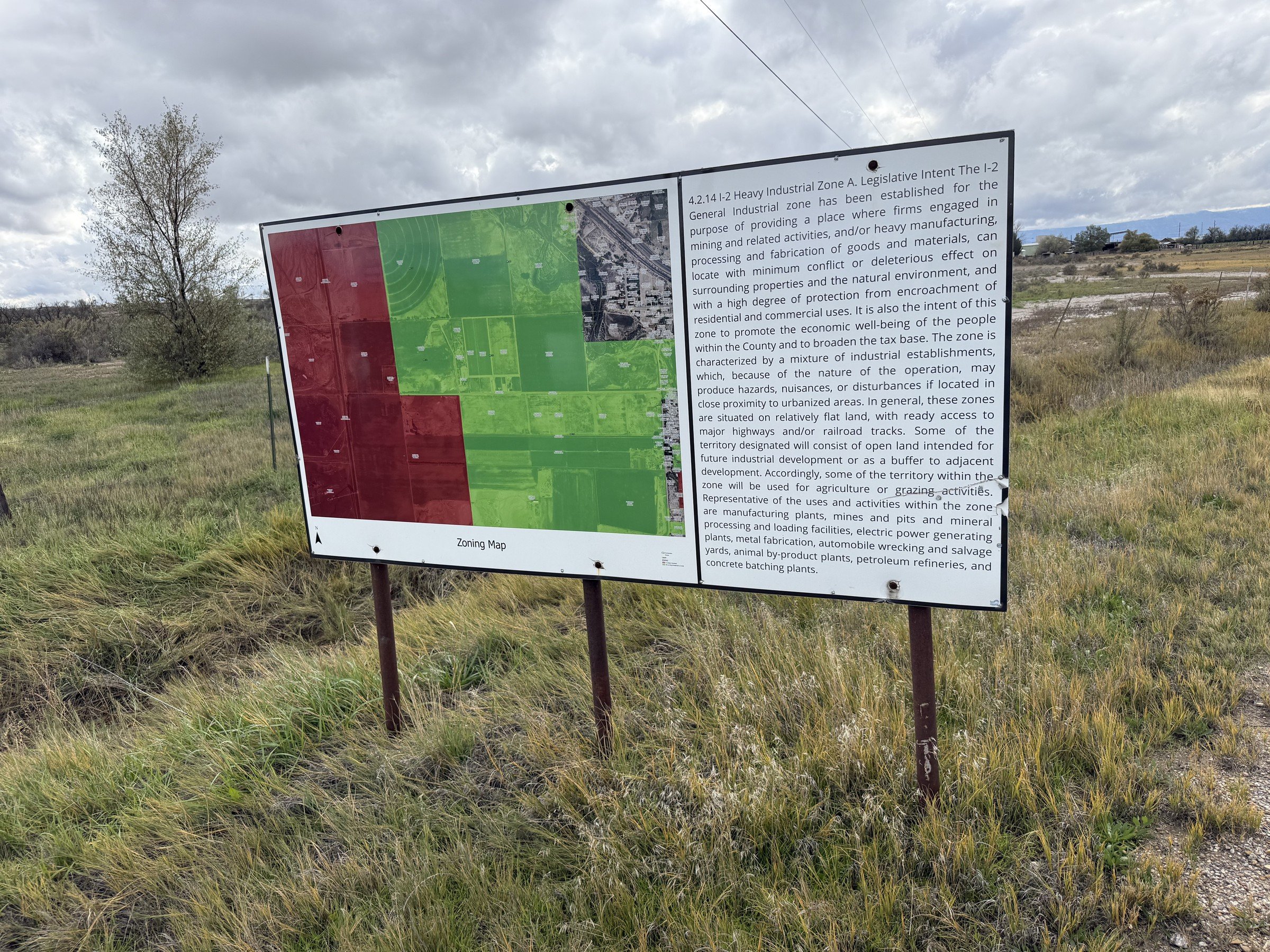
What Carbon County has bought for the Ridge Road park, 2023-2026 [5, 6, 7, 27, 61, 68, 69, 70, 71]:
| When | What | Acres | Water shares | Price |
|---|---|---|---|---|
| 2023-2024 | Three parcels from a family trust | 308 | 550 (as offered in July 2023) | about $4.25 million (state records) |
| 2025 | A half-acre for a road | 0.5 | none | not in minutes or deed |
| 2026 | One parcel (02-1806) | 120 | 240 | $2,000,000 (approved) |
| 2026 | Two parcels (seller called 2C’s Properties in the minutes) | 207 | none | not in minutes or deed |
| Total | 635 | 790 | $6.25 million known, plus $26,390 unexplained; two prices unknown |
A few things to know about these numbers:
- The 2026 payments don’t show up in the state’s public spending database, Transparent Utah, yet. That’s not a sign of missing money: Carbon County’s posted 2026 spending currently runs only through about mid-June 2026, so later payments wouldn’t show yet [72].
- State spending records also show $26,390 more on the county’s land-purchase line for the 2023-2024 land on January 31, 2025, with no payee or purpose shown; the county’s 2025 budget lists it too [61, 90].
- The county took title to the 2026 land in July and August: parcel 02-1806 on July 21, and the other two parcels on August 13, six days before Jensen announced that Georgia-Pacific had canceled [7, 9, 71]. In both deeds the sellers kept the oil and gas rights under the land, and in the second deed all other minerals too [7, 71].
- The half-acre road parcel’s deed was recorded on January 30, 2025 [70]. The commission voted to “ratify” the purchase six days later [69].
- No appraisal for any of these purchases is mentioned in the commission’s agendas or minutes from 2023 through October 7, 2026.
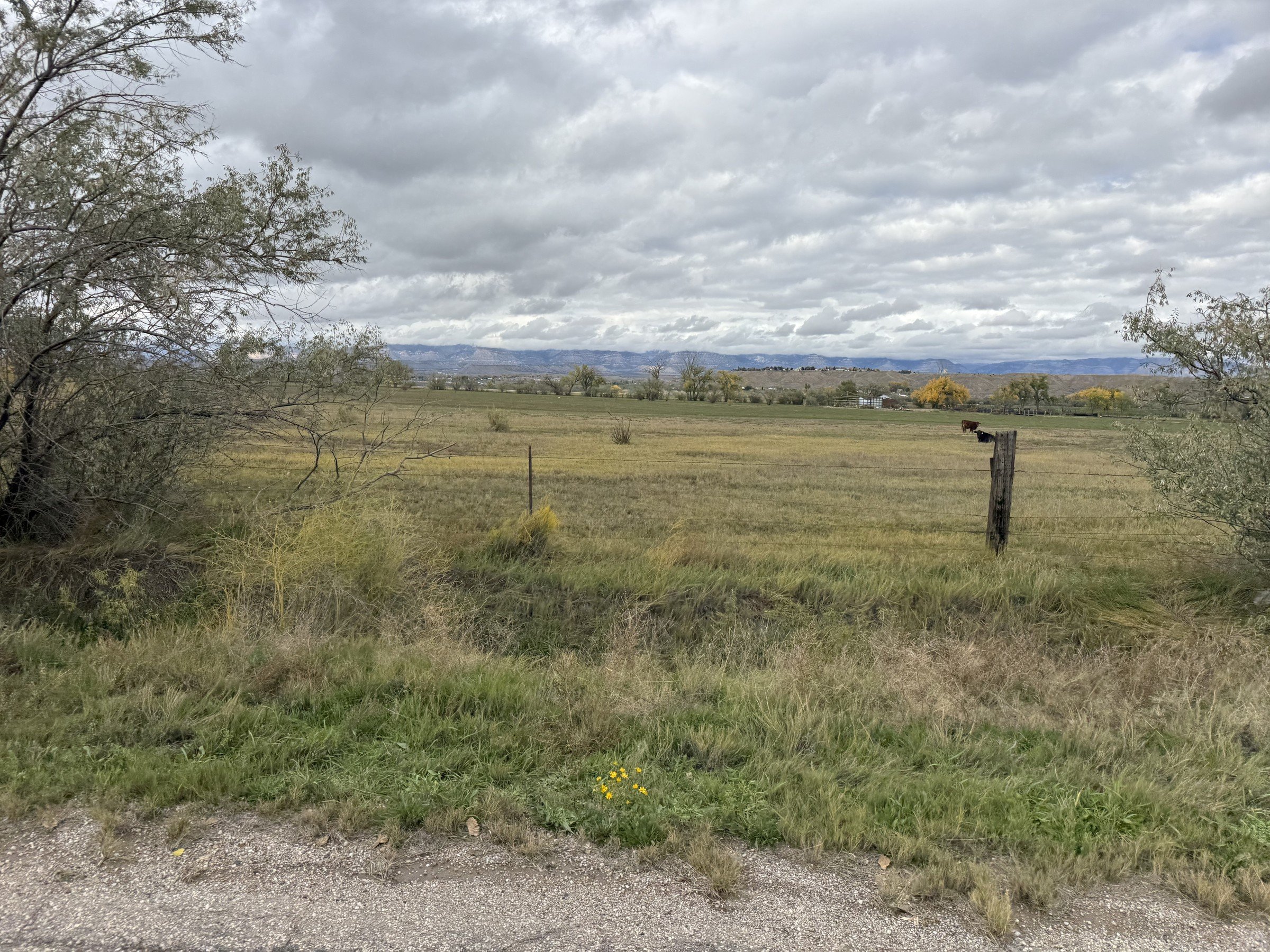
Was the price fair? For the 2023-2024 land, it’s hard to say without an appraisal. Water is valuable here. If the $1.4 million paid in 2023 bought only water (the 350 of the 550 shares that the 2024 land deal didn’t include), the county’s own numbers suggest it paid about $4,000 a water share [27, 61, 64]. Take the water out, and the land cost about $6,667 an acre, less than Utah’s average for irrigated cropland ($7,760 an acre in 2023) but well above its average for non-irrigated cropland ($1,760 an acre that year) [64, 73]. With its water included, the land cost about $13,800 an acre, about 1.8 times the irrigated average [61, 73].
For parcel 02-1806, it’s harder to say. The county’s own assessor valued that land at $117,039 in 2025, under $1,000 an acre, while the county agreed to pay $2 million [5, 74]. The tax notice doesn’t say whether that value counts the 240 water shares, so the two numbers may not measure the same thing. But if the assessor was right about the land, the county paid nearly $7,850 a share for the water: about twice the rough 2023 estimate above. Half of the 2026 shares are Carbon Canal shares rather than reservoir shares [5]. The county hasn’t said how it split the $2 million. No appraisal appears in the county’s agendas or minutes, and DIG has asked the county whether one was done.
7. What the record shows in Jensen’s favor
Jensen has been the park’s champion. From 2024 through 2026, he presented 14 of the 22 park items that came before the commission and made or seconded the motion on 17 of the 20 that went to a vote. All passed, with no recorded “nay.” [75]
His goal is a real one: replacing “lost revenue from the loss of coal mines and the power plant.” And some of what he has told the public checks out in the county’s own books. In August 2024 he said sales of surplus county property had “brought in 1.4 million dollars.” [76] The county’s budgets show $1,412,222.31 in “sale of fixed asset” revenue in 2022 and 2023 [77, 78]. The land purchases were all voted on in public at county commission meetings, not by the economic development board, though the half-acre road parcel only after it had closed [5, 56, 64, 69, 70].
DIG sent its questions on October 26, 2026 to Commissioner Jensen, copied to the other two commissioners and the county clerk, asking for answers by the end of that day. No reply had arrived by then. DIG will add any answer it receives.
8. Daniel Campbell: what he said, and what the record shows
Daniel Campbell, who beat Jensen in the June 23, 2026 Republican primary by ETV’s election-night count, held no elected county office when any of these decisions were made [35, 79]. The county bought water from his parents in 2023 and, in 2024, land held in his parents’ family trust [56, 61, 68]. On May 16, 2026, during his primary campaign, he answered, on Facebook, claims that he had profited from it [80]. DIG checked his statement against the public record. Here is what it shows.
“I did not receive any money from Carbon County.” [80] Nothing in the land records contradicts him. The county’s spending records list the $1.4 million it paid in September 2023 to his parents by name [61]. The deed for the land, recorded November 20, 2024, was signed by his mother as the trustee of the family trust [68]. Daniel Campbell’s name does not appear in it.
The sale was decided “between my mother, father, and Carbon County before my father passed away in February 2025.” [80] The record supports him. The board heard the family had accepted the county’s offer in July 2023, the commission approved the water agreement in September 2023 and the land sale in September 2024, and the deed was signed on November 18, 2024 [27, 56, 64, 68].
“The value of that deal was largely tied to the amount of water rights involved.” [80] The record supports him. The county’s first payment, $1.4 million, was made the day after the commission approved a “water purchase agreement” with his parents [56, 61]. If that payment bought only water (the 350 of the 550 shares not included in the 2024 land deal), the county’s own numbers put the water at about half of the $4.25 million total [27, 61, 64].
The data center site being discussed “is east of Wellington” and “nowhere near the Campbell property.” [80] The record supports him. Altigen’s proposed site is about five to seven miles east of the county’s Ridge Road land, which includes what it bought from his family, with the town of Wellington in between (measured on county and state parcel maps) [14, 81]. And two of the parcels the county bought in 2026 were wanted, the board’s minutes say, by the company under the confidentiality agreement, which by the matching details in section 1 appears to have been Georgia-Pacific’s wallboard plant, not a data center [8].
“The county has a signed NDA and will not disclose what company they are bringing in.” [80] The record supports him. Three days after his statement, the minutes of Jensen’s update to the economic development board say “The NDA wants” two of the parcels, without naming the company [8]. In the county records DIG reviewed, no company under a confidentiality agreement was named until August 19, 2026, when Jensen said the county had lifted “a long-standing non-disclosure agreement” and announced that Georgia-Pacific had canceled [9].
“The remaining 80 acres connected to our family farm are different.” [80] County assessor records, as of October 24, 2026, list an 80-acre parcel held by his parents’ trust [82]. In October 2025 the economic development board heard that “the main holdup” in buying land for the confidential project was “the purchase price of an 80-acre parcel.” [4] Neither record says whether it is the same land.
Some of his statements can’t be checked against public records, and DIG asked Commissioner Jensen and the county about them on October 26, 2026. He wrote that “after attorneys became involved, we were directly told that if we did not comply, the county would take the property through eminent domain,” that the family was told otherwise “they would block our access to the remaining 80 acres,” and that the county “continued pushing for us to sell our remaining water shares.” [80] Eminent domain, also called condemnation, is the government’s power to take private land for public use, with payment. No commission agenda or minutes DIG reviewed from 2023 through October 7, 2026 mention using it on this land. No reply had arrived by the deadline. Campbell also wrote that people “connected to the proposed project” drove onto the farm without permission and placed survey markers [80]. DIG has not been able to confirm that, and on October 26, 2026 asked Commissioner Jensen and the county whether anyone acting for the county or a prospective buyer entered the land. No reply had arrived by the deadline.
On every point about the land sale that the public record can test, nothing DIG found contradicts Campbell’s account. Questions about how these deals were handled are questions for the commission, not for the families who sold the land.
9. Questions DIG is putting to Commissioner Jensen and the county
- What did the county pay for the two parcels the minutes call 2C’s Properties land?
- When the county closed on those parcels on August 13, 2026, had Georgia-Pacific told it the plant was in doubt?
- Was there an appraisal for any of these purchases?
- How much of the $2 million for parcel 02-1806 was for water?
- Who signed confidentiality agreements for the county since 2025, with which companies, and when?
- Did Georgia-Pacific have a deal to buy land from the county? What happens to that land now?
- Do the 2023 sellers still farm the land, and under what agreement?
- Did the county, or anyone for it, tell the Campbell family that their remaining land could be taken by eminent domain, or that their access could be blocked?
- Did anyone acting for the county or a prospective buyer enter the Campbell family’s land in May 2026 to survey it?
- Is the “80-acre parcel” the board heard about in October 2025 the Campbell family’s land?
- Now that Georgia-Pacific has withdrawn, what will the county do with the park land and its water shares? Has any county water been offered to Altigen or another company?
- What was the $5,000 payment charged to the county’s ARPA expenditure account in August 2025 for?
- Why were several of the economic development board’s meeting notices and minutes posted on the state website weeks or months after the meetings?
DIG sent these questions on October 26, 2026, asking for answers by the end of that day. None had arrived by then.
10. Ask for the records yourself
Under Utah’s Government Records Access and Management Act, anyone can ask the county for these records [83]. Copy a ready-made request from the end of this article, add your name, mailing address and daytime phone at the bottom, and email it to clerks@carbon.utah.gov [84]. The county’s GRAMA page says “all GRAMA requests must be submitted to” the County Clerk’s office [85].
11. Where to take a concern
A records request gets you documents. If, after reading them, you think a public body didn’t follow the rules, these are the offices whose job it is to look. DIG has not filed a complaint, and doesn’t claim any law was broken. That is for these offices, or a court, to decide.
Meeting notices and minutes. State law puts the Utah Attorney General and the county attorneys in charge of enforcing the Open and Public Meetings Act (Utah Code 52-4-303) [86]. The act requires at least 24 hours’ public notice of each meeting (52-4-202), and requires approved minutes to be posted within three business days after a board approves them (52-4-203) [52, 53]. By the dates on the state notice website, the economic development board’s May 19, 2026 minutes went up 90 days after the board approved them, and three of its 2026 meeting notices appeared only after the meetings [36, 37, 38, 40]. Whether the act covers this advisory board, and whether it was followed, is the question to ask. The county attorney’s office advises the county itself, so a resident may prefer to write to the Attorney General. The act also lets any person denied a right under it ask a court to order the county to comply (52-4-303) [86].
The county’s federal Covid relief accounting. Carbon County received federal pandemic-relief money under the American Rescue Plan Act (ARPA) [87, 88]. The state’s public spending database, Transparent Utah, shows these entries in the county’s books:
- The $1,400,000 water payment in September 2023 was coded to “ARPA EXPENDITURES.” [61, 89]
- The $2,851,171.23 land payment was entered on that ARPA account on November 18, 2024, reversed the same day, and re-booked on December 27, 2024 as a land purchase [61, 89]. (The entries carry the county’s ledger references for budget line 10-4150-622, which the county’s budget books title “ARPA EXPENDITURES,” and then line 10-4150-623, titled “LAND PURCHASE (CAMPBELL).” [78, 90, 91])
- A $5,000 payment in August 2025 was charged to the ARPA expenditure account [89, 92]. That was eight months after the deadline the U.S. Treasury set for committing, or “obligating,” these funds: its page for the program says Treasury intends “to vigorously monitor recipients’ methods of obligating funds by the December 31, 2024, deadline.” [93] Money committed by that date can still be spent later, so whether this payment rested on an earlier commitment is a question for the county. That deadline applies to the State and Local Fiscal Recovery Funds. Treasury’s guidance for the county’s second ARPA fund, described below, says that money is “available to recipients until expended or returned to Treasury.” [94] And the county’s own reports to Treasury show both funds fully spent before August 2025: the recovery funds by March 31, 2025, and the second fund in the county’s report for 2024 [88, 95]. The county’s single audit for 2025 lists no ARPA spending that year [102].
What the county told Treasury is different. Counties must report to the U.S. Treasury how they spent this money, and Treasury publishes the reports. Carbon County reported spending its $3,974,698 in State and Local Fiscal Recovery Funds on three projects: a “RIDGE ROAD SEWER LINE EXTENSION” ($3,306,043.28), “REVENUE REPLACEMENT 2020” ($508,654.72) and an ambulance ($160,000) [87]. It reported its second ARPA fund, $2,091,031.04 from the Local Assistance and Tribal Consistency Fund, as spent under the category Treasury calls “general government operations.” [88, 94] None of the county’s reports to Treasury, as Treasury publishes them, lists a land or water-share purchase; its report on the second fund gives only spending categories [87, 88].
Treasury’s rules for the State and Local Fiscal Recovery Funds limit what water and sewer money can buy. Its 2022 final rule says that, for drinking-water projects, “The acquisition of water rights” is not an infrastructure cost and “would not be eligible under the final rule,” and that for water and sewer projects land may be bought “only if needed for the purposes of locating eligible project components.” [96] The county bought water shares; the rule does not mention water shares. The fund’s catch-all, revenue replacement, is broader: a county that takes the rule’s “standard allowance” for lost revenue “may use that amount for government services,” which the rule says generally means services the government provides, “unless Treasury has stated otherwise.” [96] Carbon County took it, claimed $508,654.72, and reported spending all of it under “REVENUE REPLACEMENT 2020.” [87]
The second fund, the Local Assistance and Tribal Consistency Fund, is the more flexible one: under the law, a county may use it “for any governmental purpose other than a lobbying activity.” [94, 97] The county’s single audit for 2023, the year of the water payment, lists that fund, $2,091,031, as its only ARPA spending that year, and its budget books record the same $2,091,031.04 as 2023 revenue on a line titled “REVENUE REPLACEMENT ARPA” [78, 91, 100].
For the land, the record is clearer. On August 21, 2024, after deciding not to take the federal grant, the commission voted in public to buy it with “our funds,” under an agenda item on “using Carbon County reserves,” and the payment ended up on a ledger line titled “LAND PURCHASE (CAMPBELL).” [61, 76, 89, 91]
For the water, the county’s books and its federal reports do not match on their face. Only the county’s own ledger can show which money paid for the water.
There is one more gap in the public record. Local governments that spend federal money above a set amount must have a yearly single audit of it and file it with the federal government’s Audit Clearinghouse [98, 99]. As of October 26, 2026, the clearinghouse lists Carbon County’s audits for 2023 and for 2025, but none for 2024, the year the $2.85 million land payment was entered on the ARPA line, reversed the same day and re-booked as a land purchase [100, 101]. The county’s 2025 audit does refer to a 2024 audit: it lists one 2024 finding, that the county did not present its fraud risk assessment to the commission on time, as the State Auditor requires, and says of federal awards, “No findings noted in the prior year.” [102] On October 26, 2026, DIG asked the county why the 2024 audit is not on file with the clearinghouse. None of the county’s filed audits reports a finding on its ARPA money [100].
Whether these entries followed Treasury’s rules is a question for the county. Residents who want them reviewed can:
- Use the Utah State Auditor’s hotline form, at auditor.utah.gov/hotline, or write to the Office of the State Auditor, Utah State Capitol, Suite 260, Salt Lake City, UT 84114; (801) 538-1025. The office takes concerns about “potentially improper state or local governmental activities,” and says the identity of people who report is generally considered protected under state law [103].
- Report to the Treasury’s Office of Inspector General, at oig.treasury.gov/report-fraud-waste-and-abuse. It takes criminal allegations involving Treasury’s Covid relief programs, including the recovery funds sent to local governments. It says a complaint can be filed anonymously, though that “may limit our ability” to investigate, or a member of the public can ask for confidential handling, which it says is not an automatic right [104].
Either way, say what you saw and where (the dates, amounts and ledger lines above), and attach what you have. Report facts, not conclusions.
Timeline
- Oct 2022: County signs a confidentiality agreement with SCS, publicly, by vote.
- Jan 2023: County hires a lobbyist for a funding request, partly to buy land on Ridge Road.
- Jul 2023: Closed session on real property (the records don’t say which); the next day, the board hears “The landowners have accepted the County’s offer.” (Those minutes aren’t posted publicly until January 2024.)
- Sep 2023: Commission approves the water deal; the next day the county pays $1.4 million, coded to its “ARPA EXPENDITURES” line (Jensen had said the money came from federal Covid relief funds).
- Apr 2024: Last mention of SCS in the board’s minutes.
- Nov 2024: County completes the land purchase: $4.25 million in total.
- 2025: In June the water district hears of a project kept confidential under an NDA; in September its minutes record effluent data sent to Georgia-Pacific.
- Jan 2026: County is told elected officials can’t sit on the economic development board. Jensen leaves his seat.
- Feb 2026: Jensen on camera: “We’ve signed non disclosure agreements but they’re significant.” The minutes leave it out.
- May 2026: Commission approves buying about 327 more acres; the public reasons don’t name the company or mention the agreement. Thirteen days later the board’s minutes of Jensen’s update say “The NDA wants” two of those parcels.
- Jul 2026: The county takes title to parcel 02-1806.
- Aug 2026: The county takes title to the last two parcels (Aug 13). Six days later Jensen announces that Georgia-Pacific has canceled its $600 million plant. The county keeps the land.
- Sep 2026: The board’s May minutes (“The NDA wants” two of the parcels) are finally posted on the state website.
Who is Larry Jensen?
Larry G. Jensen grew up in Price. He spent 38 years in construction with Nelco Contractors, 20 of them as a part owner, and sold his interest in 2014, according to ETV News [105, 106]. Before he ran for the commission, ETV reported, he served on the Price River Water Improvement District board “for 11 years in the ’80s,” and in 2016 on the county’s Transportation and Recreation Special Service District [106].
He was elected to the Carbon County Commission in November 2018 and took office in 2019 [105, 106]. When he won, ETV reported that he would focus on where the county’s money was being spent and that he wanted residents to know he was, in ETV’s words, “available and transparent,” and wanted their input [106]. At the Trust Lands board on September 17, 2026, speaking for the commission in support of Valar Atomics, he said: “Even with the pushback, we realize that there are a few in our community who will push back, but the silent majority are the ones that we really represent, and we feel like they will be supportive of this as they’re educated and learn how safe this process is.” [107] He was re-elected in 2022 with 56.44 percent of the vote, by the unofficial count ETV reported [108].
On the commission he has made new industry his cause. As he tells it, coal mines and power plants have closed, and the tax burden they once carried has shifted onto homes and businesses. In December 2023 he brought the commission a resolution supporting the energy industry, “more specifically nuclear power.” [109] In 2026 he spoke for the commission in support of Valar Atomics’ state land lease [107]. His county assignments include roads and bridges, planning and zoning, and the economic development board [35]. In August 2026 he was one of four people statewide to receive a Transformational Leader Award at the One Utah Summit, and ETV reports he helped launch USU Eastern’s Eastern Leaders Academy, which trains local leaders [105, 110]. “We have to be ready when they come,” he told ETV in August 2026, speaking of new companies [110]. At Valar Atomics’ town hall in Price on September 29, 2026, Jensen said: “I want to acknowledge that I think everybody here believes in God, and there have been lots of miracles. They’re not here by chance. And they’re here because you need them. We all need them.” [111, 0:51:51 to 0:52:08]
On June 23, 2026, Jensen lost the Republican primary for his seat to Daniel Campbell. ETV’s election-night count had Campbell at 1,542 votes (53.28 percent) and Jensen at 1,352 (46.72 percent) [79]. The county lists Jensen’s term as 2023 to 2026 [35]. The commission approved the 2026 land purchases on May 6, seven weeks before the primary; the county took title to them in July and August, in his final year in office [5, 7, 71].
Requests you can send
Utah’s Government Records Access and Management Act (GRAMA) lets anyone ask for public records [83]. To send one:
- Copy the letter, from “Dear Records Officer” to the end.
- Fill in the last line with your name, mailing address and daytime phone. The law asks for them; email is optional.
- Email it to clerks@carbon.utah.gov (copy auditors@carbon.utah.gov, which the county’s records-request page lists), with the subject line shown. Or file it at openrecords.utah.gov, or mail or hand it to the Carbon County Clerk/Auditor, 751 East 100 North, Suite 1100, Price, UT 84501. Questions: (435) 636-3200 [84, 85, 112, 113].
- Note the date. The county says it will answer within 10 business days, unless extraordinary circumstances require a delay: with the records, a denial that explains how to appeal, word that it doesn’t have them, or a date when it will follow up [85, 113].
If you get stuck, the state’s Government Records Ombudsman helps people through requests and appeals and offers mediation, at (385) 227-1226 or mminaya@utah.gov [114].
A. The Ridge Road land: price, appraisal, closing
Send to: clerks@carbon.utah.gov
Subject: GRAMA request: The Ridge Road land: price, appraisal, closing
B. The half-acre road parcel bought in early 2025
Send to: clerks@carbon.utah.gov
Subject: GRAMA request: The half-acre road parcel bought in early 2025
C. Selling and leasing the park land
Send to: clerks@carbon.utah.gov
Subject: GRAMA request: Selling and leasing the park land
D. Commissioners’ conflict-of-interest disclosures
Send to: clerks@carbon.utah.gov
Subject: GRAMA request: Commissioners’ conflict-of-interest disclosures
E. Confidentiality agreements with companies
Send to: clerks@carbon.utah.gov
Subject: GRAMA request: Confidentiality agreements with companies
F. The economic development board’s notices, minutes and recordings
Send to: clerks@carbon.utah.gov
Subject: GRAMA request: The economic development board’s notices, minutes and recordings
G. The county’s water shares and who has asked for them
Send to: clerks@carbon.utah.gov
Subject: GRAMA request: the county’s Ridge Road water shares
Sources
Carbon County Commission
- Carbon County Commission, minutes, May 6, 2026. PDF. ↩ a b c d e f g h i j
- Carbon County Commission, minutes, August 19, 2026. PDF. ↩ a b c d e f g h
- Carbon County Commission, minutes, February 4, 2026. PDF. ↩ a b c
- Carbon County Commission, agenda, October 5, 2022. PDF. ↩
- Carbon County Commission, minutes, October 5, 2022. PDF. ↩
- Carbon County Commission, minutes, January 21, 2026. PDF. ↩ a b c
- Carbon County Commission, minutes, October 7, 2026. PDF. ↩ a b c
- Carbon County Commission, minutes, September 6, 2023. PDF. ↩ a b c d e f g h
- Carbon County Commission, amended agenda, July 19, 2023. PDF. ↩ a b
- Carbon County Commission, minutes, July 19, 2023. PDF. ↩ a b
- Carbon County Commission, agenda for September 6, 2023 (posted August 31, 2023). PDF. ↩ a b
- Carbon County Commission, minutes, September 4, 2024. PDF. ↩ a b c d e f g
- Carbon County Commission, minutes (Utah Public Notice Website file 1268503). PDF. ↩
- Carbon County Commission, agenda, April 16, 2025. PDF. ↩
- Carbon County Commission, minutes, February 5, 2025. PDF. ↩ a b c
- Carbon County Commission, minutes, August 21, 2024. PDF. ↩ a b c
- Carbon County Commission, minutes, December 20, 2023. PDF. ↩
- Carbon County Commission, minutes, July 2, 2025. PDF. ↩
Video of public meetings
- Carbon County Commission, meeting video, August 19, 2026, at 0:02:26 (the county’s video channel). video. ↩ a b
- Carbon County Planning Commission, meeting recording, October 6, 2026, Altigen item, at 0:22:24 (on file with DIG). ↩
- Carbon County Commission, meeting video, February 4, 2026, at 0:19:03 (the county’s video channel). video. ↩
- Carbon County Commission, meeting video, May 6, 2026, at 0:49:39 (the county’s video channel). video. ↩ a b c
Economic development board
- Carbon County Community Economic Development Board, minutes, August 19, 2025. PDF. ↩ a b
- Carbon County Community Economic Development Board, minutes, October 21, 2025. PDF. ↩ a b
- Carbon County Community Economic Development Board, minutes, May 19, 2026. PDF. ↩ a b c d e f g
- Carbon County Community Economic Development Board, minutes, March 3, 2026. PDF. ↩ a b
- Carbon County Community Economic Development Board, minutes, April 21, 2026. PDF. ↩ a b c d
- Carbon County Community Economic Development Board, minutes, March 18, 2025. PDF. ↩ a b c
- Carbon County Community Economic Development Board, minutes, January 19, 2023. PDF. ↩ a b
- Carbon County Community Economic Development Board, minutes, July 20, 2023. PDF. ↩ a b c d e f g h
- Carbon County Community Economic Development Board, minutes, July 15, 2025. PDF. ↩ a b
- Carbon County Community Economic Development Board, minutes, December 16, 2025. PDF. ↩ a b
- Carbon County Community Economic Development Board, minutes, April 15, 2025. PDF. ↩
- Carbon County Community Economic Development Board, minutes, February 17, 2026. PDF. ↩ a b c
- Carbon County Community Economic Development Board, minutes, June 16, 2026. PDF. ↩ a b c
- Carbon County Community Economic Development Board, minutes, August 18, 2026. PDF. ↩ a b c
- Carbon County Community Economic Development Board, minutes, June 17, 2025. PDF. ↩
- Carbon County Community Economic Development Board, minutes, April 16, 2024. PDF. ↩ a b
- Carbon County Community Economic Development Board, minutes, May 18, 2023. PDF. ↩
- Carbon County Community Economic Development Board, minutes, March 19, 2024. PDF. ↩
Other public bodies
- Price River Water Improvement District, board minutes, June 3, 2025. PDF. ↩
- Price River Water Improvement District, board minutes, September 2, 2025. PDF. ↩
- Price River Water Improvement District, board minutes, February 3, 2026. PDF. ↩
- Price River Water Improvement District, board minutes, September 1, 2026. PDF. ↩ a b
- Carbon County Planning Commission, agenda, October 6, 2026. PDF. ↩ a b
- Carbon County Recreation and Transportation Special Service District, minutes, July 14, 2025. PDF. ↩ a b
- Carbon County Recreation and Transportation Special Service District, board packet for January 12, 2026 (profit and loss; budget vs. actual). PDF. ↩
- Utah Trust Lands Administration, board minutes, August 20, 2026, and meeting transcript, September 17, 2026. minutes PDF transcript PDF. ↩ a b
Utah Public Notice Website
- Utah Public Notice Website, notice 1081589 and its posting record, read October 25, 2026. utah.gov. ↩ a b c d e
- Utah Public Notice Website, notice 1081593 and its posting record, read October 25, 2026. utah.gov. ↩ a b c d
- Utah Public Notice Website, notice 1091907 and its posting record, read October 25, 2026. utah.gov. ↩ a b c d
- Utah Public Notice Website, notice 1088467 and its posting record, read October 25, 2026. utah.gov. ↩ a b
- Utah Public Notice Website, notice 1108523 and its posting record, read October 25, 2026. utah.gov. ↩ a b c d e
- Utah Public Notice Website, notice 980926 and its posting record, read October 25, 2026. utah.gov. ↩ a b
- Utah Public Notice Website, notice 1002727 and its posting record, read October 25, 2026. utah.gov. ↩
- Utah Public Notice Website, notice 1009569 and its posting record, read October 25, 2026. utah.gov. ↩
- Utah Public Notice Website, notice 1045747 and its posting record, read October 25, 2026. utah.gov. ↩
- Utah Public Notice Website, the Carbon Community Economic Development Board’s notice list, read October 24, 2026. utah.gov. ↩
- Utah Public Notice Website, Carbon Community Economic Development Board notice for the October 20, 2026 meeting. utah.gov. ↩
- Utah Public Notice Website, notice 847063 and its posting record, read October 25, 2026. utah.gov. ↩ a b
- Utah Public Notice Website, Carbon County Commission notice for the September 6, 2023 meeting (posted August 31, 2023). utah.gov. ↩
County land records
- Carbon County Assessor, tax information service: owner, acreage and deed entry for the six park parcels, read October 24, 2026 (query on file with DIG). ↩ a b c
- Carbon County Recorder, warranty deed, entry 878829 (parcels 02-1812 and 02-1798), recorded August 13, 2026. ↩ a b c d e f
- Carbon County Recorder, special warranty deed, entry 871278, recorded November 20, 2024. ↩ a b c d
- Carbon County Recorder, deed of personal representative, entry 872084 (the half-acre road parcel), recorded January 30, 2025. ↩ a b c
- Carbon County Recorder, warranty deed, entry 878487 (parcel 02-1806), recorded July 21, 2026. ↩ a b c d
- Carbon County Assessor, 2025 tax notice for parcel 02-1806-0000 (on file with DIG; not published). ↩
- Carbon County Assessor, map service: boundaries of the six park parcels, read October 26, 2026 (query on file with DIG). ↩
- Carbon County Assessor, tax information service: record of an 80-acre parcel, read October 24, 2026 (on file with DIG; not published). ↩
County website
- Carbon County website, Recreation and Transportation Special Service District page, read October 26, 2026. carbon.utah.gov. ↩
- Carbon County website, County Commission page, read October 24, 2026. carbon.utah.gov. ↩ a b c d e
- Carbon County website, meetings page, read October 25, 2026. carbon.utah.gov. ↩
- Carbon County website and its meeting database, read October 25, 2026. carbon.utah.gov meeting database. ↩
- Carbon County website, Community Economic Development Board page, read October 25, 2026. carbon.utah.gov. ↩
- Carbon County website, Clerk/Auditor department page, read October 26, 2026. carbon.utah.gov. ↩ a b
- Carbon County website, GRAMA request page, read October 26, 2026. carbon.utah.gov. ↩ a b c
- Carbon County website, records request page, read October 26, 2026. carbon.utah.gov. ↩ a b
Budgets and spending
- Transparent Utah (Office of the State Auditor), Carbon County payments, read October 24, 2026. transparent.utah.gov. ↩ a b c d e f g h i j k l m n
- Transparent Utah, how far Carbon County’s 2026 spending is posted, read October 25, 2026. transparent.utah.gov. ↩
- Carbon County, 2023 amended budget (December 2023). PDF. ↩
- Carbon County, 2025 final budget. PDF. ↩ a b c
- Transparent Utah, Carbon County’s ARPA-line entries, read October 26, 2026. transparent.utah.gov. ↩ a b c d
- Carbon County, 2025 amended budget (July 16, 2025). PDF. ↩ a b
- Carbon County, 2024 amended budget (December 4, 2024). PDF. ↩ a b c
- Transparent Utah, Carbon County payment of August 31, 2025 on ledger line 10-4150-622, read October 25, 2026. transparent.utah.gov. ↩
Federal funds and audits
- U.S. Treasury, State and Local Fiscal Recovery Funds project and expenditure data through March 2026. home.treasury.gov. ↩ a b c d
- U.S. Treasury, Local Assistance and Tribal Consistency Fund public data release for 2024 (November 4, 2025). home.treasury.gov. ↩ a b c d
- U.S. Treasury, Coronavirus State and Local Fiscal Recovery Funds page, read October 26, 2026. home.treasury.gov. ↩
- U.S. Treasury, Local Assistance and Tribal Consistency Fund guidance (September 2023). PDF. ↩ a b c
- U.S. Treasury, State and Local Fiscal Recovery Funds project and expenditure data through March 2025. home.treasury.gov. ↩
- U.S. Treasury, Coronavirus State and Local Fiscal Recovery Funds final rule, 87 FR 4338 (January 27, 2022). govinfo.gov. ↩ a b
- American Rescue Plan Act of 2021, Pub. L. 117-2, sections 603 and 605. govinfo.gov. ↩
- 2 CFR 200.501 (2024 edition), audit requirements. govinfo.gov. ↩
- 2 CFR 200.512 (2024 edition), report submission. govinfo.gov. ↩
- Federal Audit Clearinghouse, Carbon County, Utah, single audits 2019-2026, searched October 26, 2026. app.fac.gov. ↩ a b c
- Federal Audit Clearinghouse, search for Carbon County’s 2024 single audit, October 26, 2026. app.fac.gov. ↩
- Carbon County, single audit for fiscal year 2025 (Larson & Company, July 21, 2026), Federal Audit Clearinghouse. app.fac.gov. ↩ a b
Utah law
- Utah Code 52-4-202. le.utah.gov. ↩ a b
- Utah Code 52-4-203. le.utah.gov. ↩ a b c
- Utah Code 52-4-205. le.utah.gov. ↩
- Utah Code 63G-2-204. le.utah.gov. ↩ a b
- Utah Code 52-4-303. le.utah.gov. ↩ a b
Reporting a concern and records help
- Office of the State Auditor, hotline page, read October 26, 2026. auditor.utah.gov. ↩
- U.S. Treasury Office of Inspector General, Report Fraud, Waste, and Abuse, read October 26, 2026. oig.treasury.gov. ↩
- State of Utah, Open Records Portal. openrecords.utah.gov. ↩
- Utah Division of Archives and Records Service, Government Records Ombudsman page, read September 30, 2026. archives.utah.gov. ↩
News reports and data
- U.S. Department of Agriculture, National Agricultural Statistics Service, Land Values 2024 Summary (August 2024). PDF. ↩ a b
- ETV News, “Republican primary results released in Emery, Carbon Counties,” June 23, 2026. etvnews.com. ↩ a b
- ETV News, “Castle Country takes center stage at One Utah Summit,” August 9, 2026. etvnews.com. ↩ a b c
- ETV News, “Larry Jensen, Tony Martines to Fill Carbon County Commission Seats,” December 5, 2018. etvnews.com. ↩ a b c d
- ETV News, “Unofficial 2022 Election Results Released,” November 8, 2022. etvnews.com. ↩
- ETV News, “Movers and Makers: Larry Jensen,” August 26, 2026. etvnews.com. ↩ a b
Other
- DIG’s count of the Ridge Road park items in the Carbon County Commission’s agendas and minutes, 2024-2026 (on file with DIG). ↩
- Daniel Campbell, statement posted on Facebook, May 16, 2026 (saved copy on file with DIG). ↩ a b c d e f g h i
- Valar Atomics town hall, Price, September 29, 2026, audio recording (on file with DIG). ↩